Fasting: Pro or Con?
Considering The Least Expensive Eating Plan


Do you fast?
I haven’t done so recently but when I did so in the past, I was good at it once I got the flow of it established. Like any other deprivation, the first 2-3 days were pretty rough but then it started to level out.
The benefits of fasting for overweight people and other healthy people is hotly debated but it is hard to argue with thousands of years of practice. People fast for many reasons: spiritual, physical, and mental. There is no denying that fasting is a huge ego boost for those who can do it successfully. It is certainly one of the ultimate expressions of self-control over the body and the one that many of us obese folks struggle with the most.
We want to be friends with our body. We do not want to deprive it or deny it or engage in battle with it. That becomes complicated when what we perceive our bodies need and want. Right now, my body wants a freshly made, light and fluffy maple bar and a Dr. Pepper to wash it down. That isn’t good for my blood glucose level, my insulin responses, my body mass index, my digestive success, or my inflammation levels. As nearly as I can tell, my body wants it for a massive dopamine fix.
Are we at battle with our bodies when they try to kill us or are we at battle with our body chemicals specifically for lying to us about what our body needs? A junkie’s body is screaming for a heroin fix, does that person need to go to battle with their body?
Most people who have been overweight for a significant part of their lives have considered whether their body is a friend or an adversary. It is essential that we love and respect our bodies, regardless of whether we see it as friend or foe. The question is whether this beloved body is honest with us about what it needs or if we are honest about interpreting its messages. “What??? Did you say ICE CREAM? I am sure you are saying, ICE CREAM. Lalalalalala…”
Fasting is a definite deprivation and although the results can be excellent, it is the direct opposite of what the body “wants.” The body wants to eat when it’s hungry. Admittedly, it likely wants to eat different foods than we tend to put into it, but it does want to eat.
My husband fasts every quarter and October is one of his fasting months. He usually does a 5 day fast and all he consumes during that time (as far as I know and he will admit) is water, black coffee, and around day 3, a mineral supplement that he puts in his water that supposedly does not break the fast. https://drinklmnt.com/ is the supplement he uses.

He claims it helps him physically but he also gets a great deal out of it on other levels. He has done this for many years and he is flexible about it. He usually starts on the first of the fasting month but if we have a special dinner or something going on, he will shift it out. There have been some months where he has gone into the fast and then decided he wasn’t feeling it and stopped. More often than not, he sees it through.
I fasted with him for five days once. I would like to say I made it through the entire five days but on day 3, I ate a half cup of scrambled eggs and then before day 5 was over, I had a cup (oh so delicious, amazing eyes-rolling-back-in-my-head delectable) of chicken bouillon, which I mistakenly thought would not officially break a fast. Still, not bad at all.
After doing that fast, I found I could no longer eat commercially prepared ground beef - specifically ground beef, not steaks or roasts - any longer. If the ground beef is clean, like from a quality butcher or a farm-to-fork restaurant, I do just fine. Anything else gives me a stomachache and here it is five years later and that is still the case and it started immediately after the fast was over.
My relationship with food temporarily changed (for the better) and I became extremely conscious of everything I put in my mouth. It was difficult - as difficult as you might imagine - but it was quite worthwhile.
Since then, I have done some intermittent fasting for months at a time, which I also find to be beneficial but also in some ways, more difficult than a full fast as far as cravings go. I have also had times where I went up to 72 hours without food or anything caloric. That tends to be beneficial for me as well.
Although his videos have a strong smell of clickbait, Jason Fung is one of the contemporary and prominent experts on fasting:
My favorite promoter of fasting is Dr. Pradip Jamnadas. His videos are just wonderful, so although Dr. Fung is credited with pushing fasting back into the conversation, Dr. J is less dynamic, less click-baity, and makes just so much sense.
I learned a great deal from him, particularly about fasting as an obese person with insulin resistance.
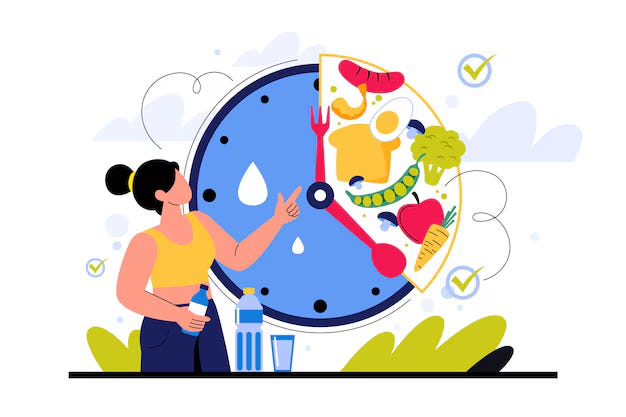
For those who do not know, intermittent fasting (IF) is all about timing when you eat, also known as an “eating window.” Most people start out with an 8-hour eating window, so they will eat from (for example) 10:00 am until 6:00 pm. To lose weight, you eat as much healthy food as you want during that window, then you have only water or non-caloric coffee or tea during the remaining 16 hours. A bonus is that for a good piece of that time, you are sleeping. Some people skip breakfast, eat lunch at noon, then stop eating at 8:00 pm. The timing is flexible and you can set it up as you wish.
If that’s tough, you can start at a 12-hour eating window, then after a week or so, go to a 10-hour window, then an 8-hour window.
For faster results, some people continue shrinking the eating window until they have a 4-hour eating window or even OMAD (One Meal A Day) that happens during a one our eating window. The challenge with this is getting a healthy amount of calories and nutrients in just one meal.
Still another variation is ADF (Alternate Day Fasting) where you eat normally for one day and then eat less than 500 calories on the next day, then back to eating normally again followed by another 500-calorie day.
Any of this gives your body a chance to rest from digestion and prolonged fasting allows it to go into autophagy, which usually starts around 24 hours into fasting and peaks at 48 hours in. Autophagy is when the body literally begins cell repair of damaged parts of your body which has HUGE benefits.
In support of that, during a longer fast, the cravings tend to lessen dramatically by the end of day 3. Before that, they are pretty insane. After that, it isn’t so hard or at least wasn’t so hard for me and Eric relates the same experience.
It is certainly a reset on all levels, albeit a hard earned one. It provides immense clarity, not only from the sharpening of brain activity and the senses, but also because it forces you to face your relationship with food head on.
Fasting is not for everyone. It is very, very hard and more so for people who rely on food for emotional balance.
If you decide to try it, read beyond this article for information on how to do it in a healthy way.
I have a friend who is extremely successful at weight loss by combining IF with regulated macronutrients. I know they won’t mind if I share the guidelines they shared with me:
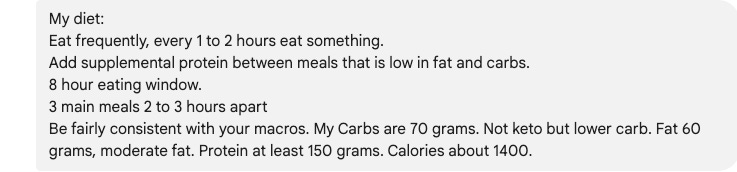
Using this plan, they have gotten their weight and their blood sugar under control.
As I said, not everyone is cut out for fasting but for those who are able and willing to try it, the results can be impressive. I am debating joining Eric for another fast in October.