

The Precious Quiet
Unfiltered Truth About Normalizing Chronic Pain

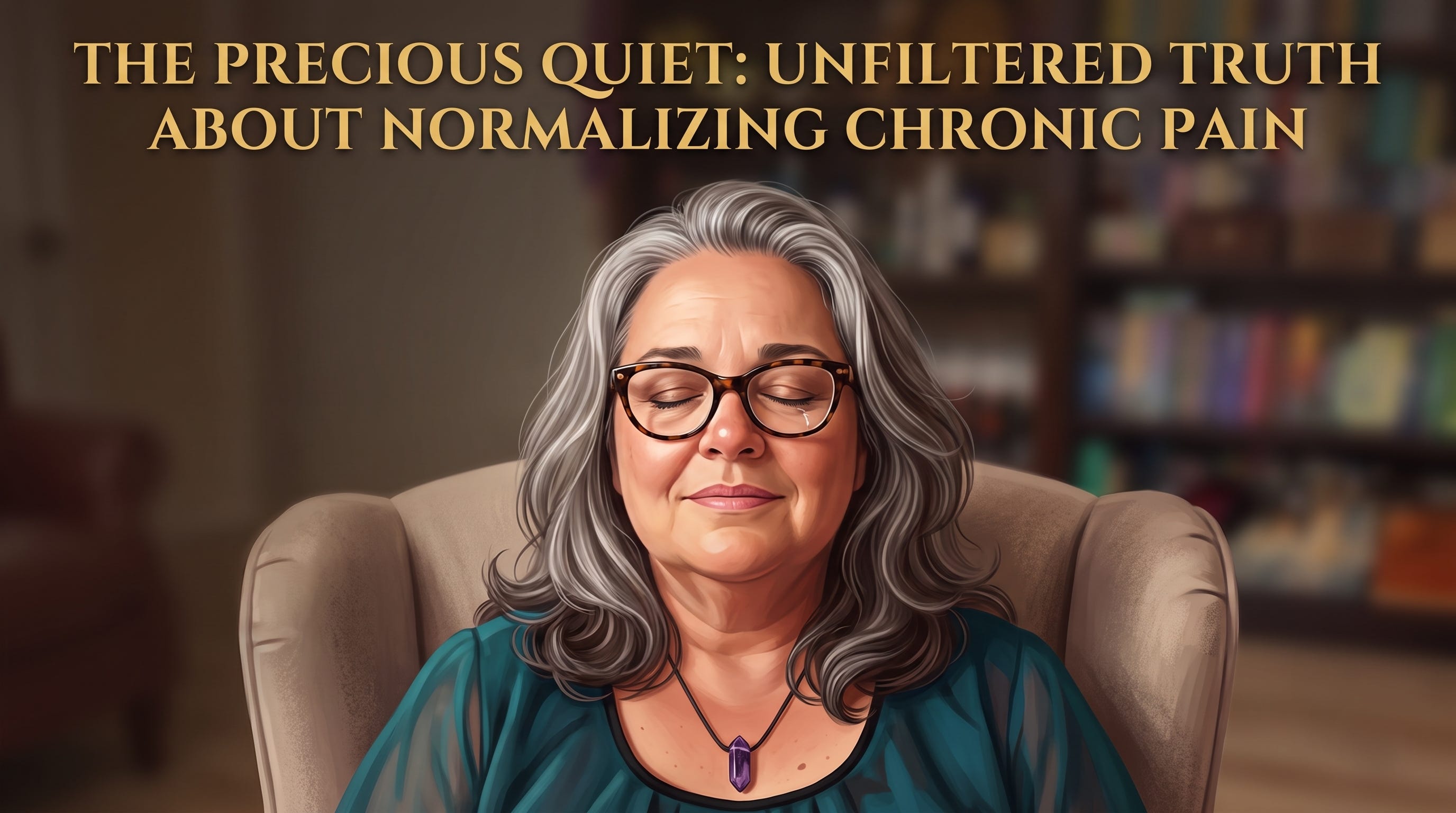
There is a specific kind of magic that happens in the absolute stillness of a bedroom or while sinking into a lounge chair. It is the moment when you realize, with a sudden and quiet shock, that nothing hurts. In those precious, fleeting minutes, a wave of emotion hits so close to the surface it can bring you to tears—not from sadness, but from the sheer, overwhelming relief that the background noise of your own body has finally gone quiet for a short time.
Because for those of us living a life of boots-on-the-ground reality, pain is no longer an occasional visitor. It has moved in, unpacked its bags, and become the baseline. Maybe it is life’s way of coaching us to look forward to death when, in theory, nothing ever hurts again.
For me, the roll call is daily and predictable: my lower back, my right rotator cuff, and my injured right knee. Then there is my left knee, which has spent the last eight months carrying the extra weight and compensating for the right one, and finally, the sharp, stubborn ache at the base of my left thumb. You learn to navigate your day around the physical geography of your own joints, mapping out movements like a general plotting a course through hostile territory.
The Gospel of the Forever-Young
If you turn on your phone or listen to the modern health industry, you will hear a completely different sermon. We are constantly barraged by wellness enthusiasts, biohackers, and influencers who preach that physical deterioration and chronic pain are not endemic to aging. They insist that with the right combination of collagen powder, mobility drills, anti-inflammatory diets, and sheer willpower, your joints should function like a well-oiled machine until you’re ninety.
But let’s look closely at the people delivering this gospel: it is almost always the young.
It is easy to lecture the world on how the body should naturally age when your cartilage hasn’t yet left the building and your joints haven’t accumulated decades of historical mileage. It is a philosophy born of theory, a luxury of those who are still operating on their factory-default settings. They treat pain as a personal failure of maintenance rather than the natural, standard tax of living a long, full life on a planet with gravity.
Normalization as Survival
Out here in reality, normalizing pain isn’t about giving up—it’s a sophisticated psychological survival strategy. If we stopped to mourn every single ache, creak, and structural protest our bodies made throughout the day, we would never leave the house.
Instead, we adapt. We learn the exact angle to lift an arm so the shoulder doesn’t catch. We know precisely how to swing our legs out of bed to protect the back. We accept that one joint is going to scream because it’s been heroically doing the job of two for the last eight months. We normalize the discomfort so we can get on with the business of being fabulous, sovereign, and productive. We absorb the ache into the background static of our lives.
Reclaiming the Pain-Free Moments
Recognizing this reality doesn’t make us defeated; it makes us present. When you stop fighting the natural trajectory of a changing body and accept the boots-on-the-ground truth of aging, those moments of pure physical quiet become holy.
Here is how we honor the reality of our temples this week:
Dismiss the lecturers. Stop letting thirty-year-old fitness gurus make you feel guilty for having a body that remembers its history. Your joints have stories; their joints just have metadata.
Honor the compensators. Give a little mental gratitude to the parts of you that are over-performing to keep you moving. That left knee taking the brunt of the weight deserves a medal, not resentment.
Melt into the quiet. When you do find yourself lying down and the pain recedes, don’t immediately fill the space with thoughts or tasks. Stay there. Let yourself feel the luxury of zero resistance. If it brings tears to your eyes, let them come. It is the sweetest meditation on earth.
We are not broken machines that just need a new part; we are living, breathing monuments to survival. The background noise might be louder than it used to be, but when it fades into a whisper, the silence is absolutely beautiful.